
Mission and Combat System Research and Design Centre (MCSRDC) was set up in November 2008 for design and development of Mission and Combat systems for Fixed Wing and Rotary Wing Aircraft and other Aerial Vehicles. MCSRDC develops Avionics Systems from conceptual design to final product and certification for various Aircraft and Helicopters.
The R & D Centre holds Design Organisation Approval (DOA) from CEMILAC, AFQMS approval from DGAQA, AS-9100D Certification and ISO-45001 Certification.
MCSRDC Core Capabilities:
- System Architecture Design & Development.
- Mission Avionics Hardware Design & Development.
- Mission Software Design and Development.
- Algorithms for Navigation and Weapon Guidance.
- Software Verification & Validation.
- Design for Structural & Electrical Modifications.
- Avionics System Integration on Aircraft.
- Ground & Flight Testing Leading to Certification.
- Flight Simulators Design, Development & Upgrade (Fixed & Full Motion Simulators).
- Development of System Test Facilities.
MCSRDC Facilities & Infrastructure
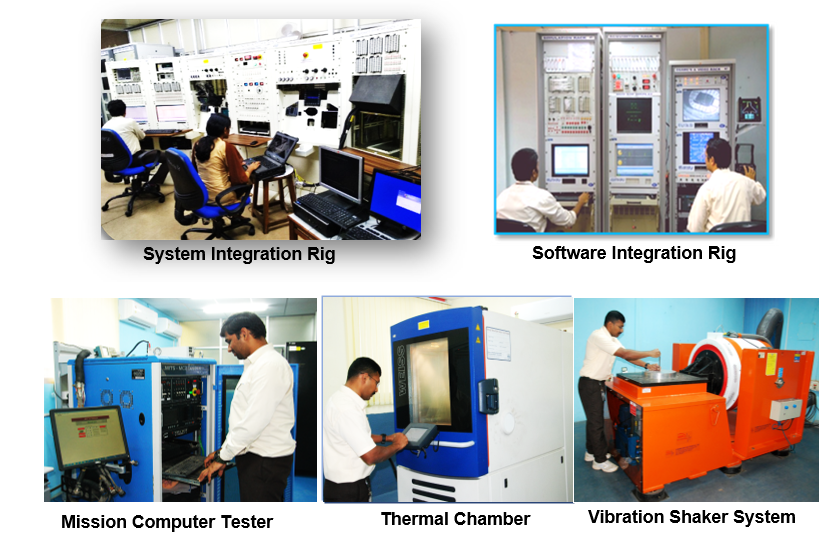
MCSRDC division is equipped with state of the art Hardware, Software and System development & testing facilities.
a) Avionics System and software integration test rigs
b) Software Design, Development and Validation Tools viz VxWorks, Integrity, Artisan, Rational -suite, LDRA, Rhapsody, DOORS, SCADE Suite etc.
c) 3D Modeling using CATIA tools
d) Virtual Cockpit System for design of Human Machine Interface.
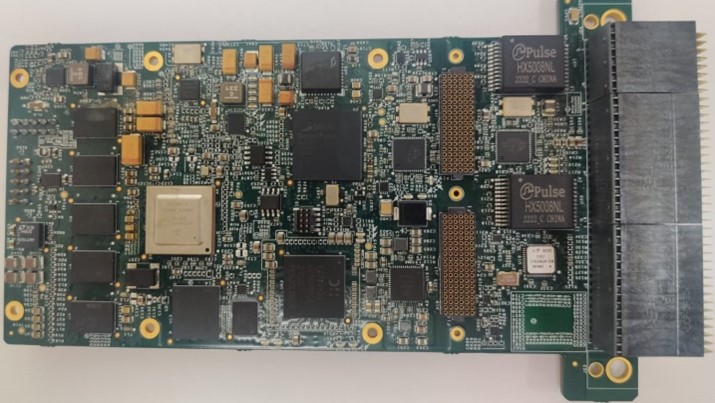
e) VME64X, VPX and Open VPX based hardware systems development facilities.
f) In-house test facilities for developmental testing of Avionics Hardware Systems
– Vibration Shaker System: 3 Ton Vibration shaker for Random over Random (RoR), Sine over Random (SoR) and Shock for all axes Flight Test data analysis facility.
– Thermal Chambers: Thermal Chambers for Low temp. & High temp. testing of Hardware modules & LRUs. Temperature Range: -54 C to + 125 C.
– Standalone test equipment for testing Mission Computers and Systems developed by MCSRDC.
g) Wide range of hardware test and analysis tools including analyzers and testers for data buses of different advanced processors like QorIQ, i.MX, Cavium MIPS processor based hardware development facilities
h) DO-254 compliant FPGA Development tools
i) PCB layout Design tools
j) Mission Planning and Debrief System (MPDS)
Contact Information:
General Manager
Mission and Combat System Research and Design Centre(MCSRDC)
Design Complex, Hindustan Aeronautics Limited
Marathahalli Post
Bangalore – 560037, India
Tel : +91(80) 22311712, 22323417
Fax: +91(80) 22313185
Email: gm[dot]mcsrdc[at]hal-india[dot]co[dot]in
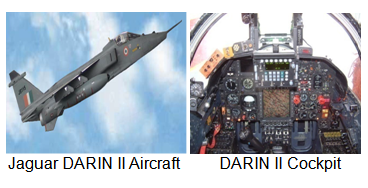
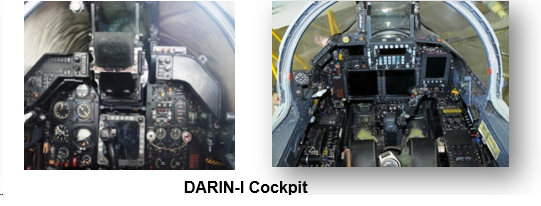
Upgrade of Jaguar DARIN-I aircraft to DARIN-III standard resulting in significant enhancement of operational capabilities, providing adequate growth potential, while also addressing obsolescence and maintenance aspects.
The Jaguar DARIN-III upgrade incorporates new state of the art Avionics Systems including in-house developed Open System Architecture Mission Computer for re-configurability, Glass cockpit solution using dual SMFD & Engine & Flight Display Unit (EFDU), Enhancement of operational capabilities through integration of Multi-Mode Radar (MSA & AESA), Software Defined Radio and EW Suite, Solid State Digital Video Recording System.
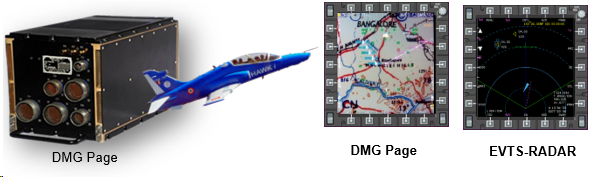
HAWK Mk 132 aircraft upgraded as HAWK-i by HAL, a Technology Demonstrator (TD) catering for addressing obsolescence, integration of state of the art indigenous systems for self-reliance, improved navigational & attack capabilities, secured voice communication and data link capability ,improved situational awareness & safety, improved training capability through Embedded Virtual Training System(EVTS), improved combat capabilities by integration of new weapons and improved operational survivability in Radar & Missile threat environment by integration of new EW suite.
Enhancement of Air to Ground combat capability by integrating Laser Designator Pod (LDP-4i) and Mk83 bomb with Lizard-2+ Laser Guided kit through an indigenously developed Mission Computer, Smart Multi-Function Display (SMFD), Data & Video Recording System (DVRS) through a dedicated MIL-STD-1553B bus (HAL bus) and Mission Planning & Debrief Station.
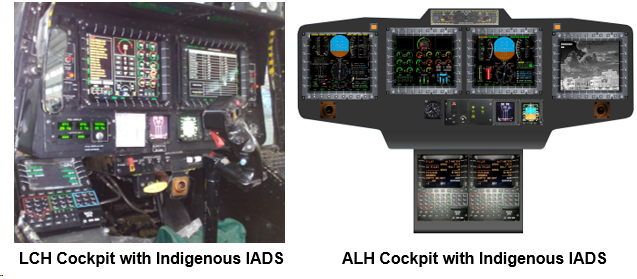
IADS is an integrated mission control and display system, interfaced with various navigation and mission sensors, communication systems and airframe sensors on the helicopter. IADS processes all vehicle sensor inputs and human machine interfaces (HMI) of all avionics and weapon system units to deliver the outputs to display system, enabling high mission performance.
Design, development and flight testing of indigenous IADS for LCH completed.
Design & Development of indigenous IADS (MCDS-Mission Computing & Display Suite) for ALH/Utility Helicopter-Maritime (UHM) is in progress.
AFCS is a digital control sub-system of the control system to enhance the stability characteristics, control and handling qualities of the Helicopters. AFCS will provide Stability augmentation, Control augmentation, Auto trim facilities, inter-axis decoupling and various Auto pilot modes in all 4-axes (pitch, roll, collective and yaw).
Design, development & flight testing of indigenous AFCS for LCH completed.
Design & Development of indigenous AFCS for ALH Mk-III & LUH is in progress.
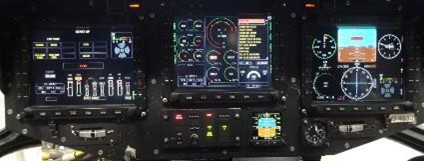
- Indigenous full cockpit solutions with in-house software
- Flexibility to add new system/ sensors/weapons
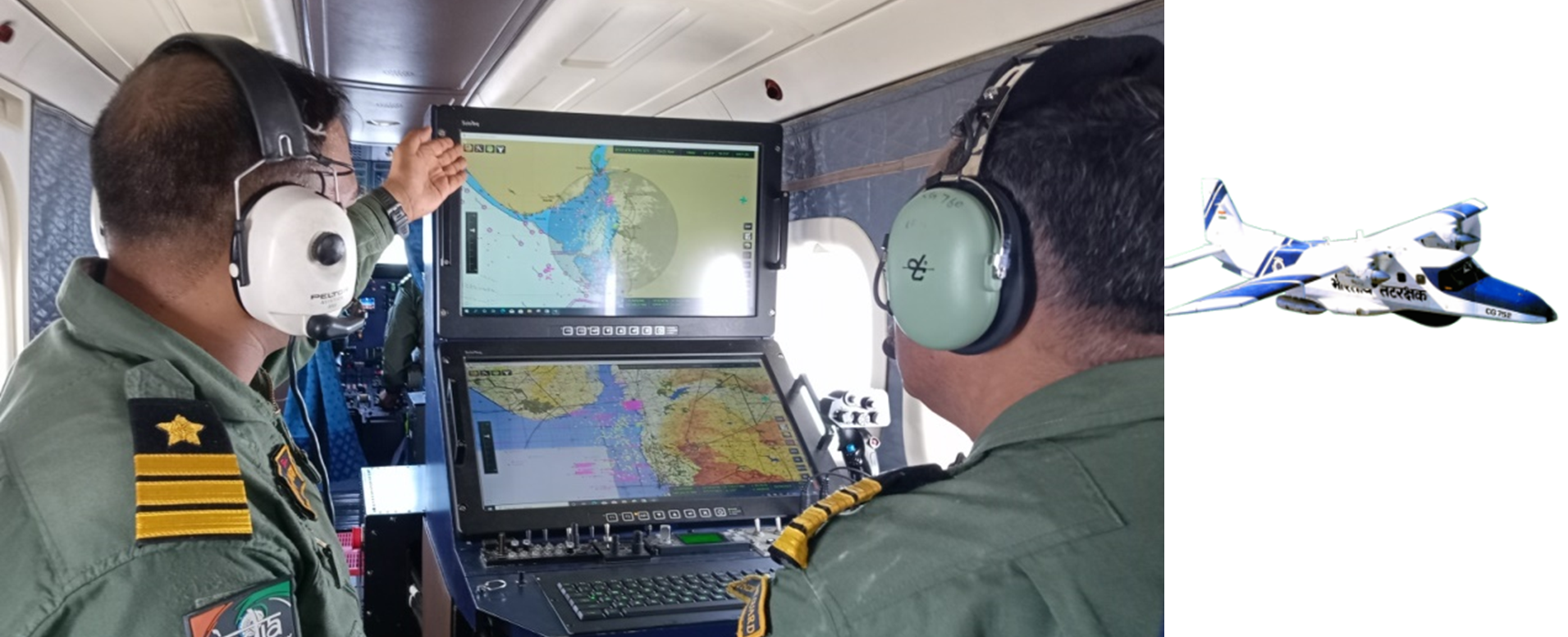
MMS provides state-of-the-art capabilities for DO-228 aircraft viz.. Maritime surveillance, Intelligence gathering, Target Acquisition and Classification & Reconnaissance functions by the fusion of data/video from various on-board sensors (viz Maritime Patrol Radar, EO/IR System, Automatic Identification System and Pollution Surveillance System & Navigation). MMS also provides facility to share and receive target information, specific data, image, reports and texts in real time with ground station through Data Link and SATCOM
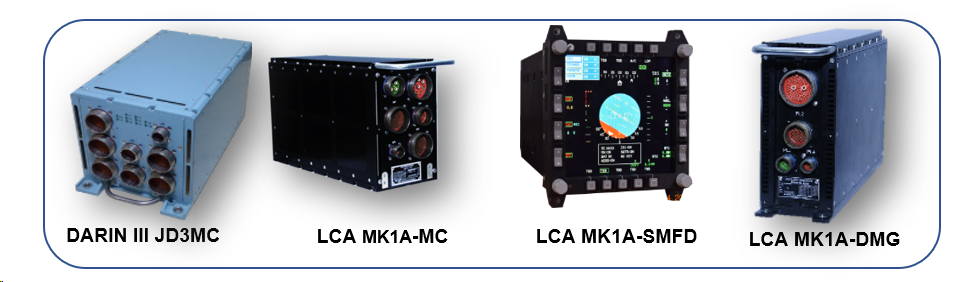
Mission Computer is an integrated multi-role real-time airborne central computer based on open system architecture technology. It integrates on-board sub-systems covering Sensors, Displays, Controls, Communications, Recording and Weapon Systems. Mission Computer acquires sensor data and pilot inputs. It processes the received data to provide navigation and weapon aiming details to the pilot on display surfaces such as Head up Display (HUD) and Multi-Function Displays (MFDs). It hosts an embedded Digital Map Generator (DMG) to provide display of different types of aeronautical charts for navigation guidance.
The Mission Computer designed and developed by MCSRDC are modular in design and flexible and easy to adapt in various platform.
- Mission Systems Avionics LRUs developed In-House:
- Mission Computer for Jaguar DARIN III aircraft
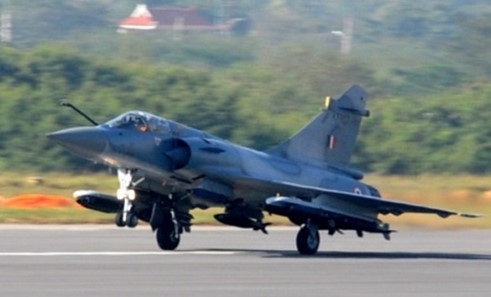
- Mission Computer for Mirage 2000 I/TI aircraft
- Display & Mission Computer(DMC) for LCH
- Mission Computer for Hawk-i aircraft
- Mission Computer for LCA Mk1A aircraft
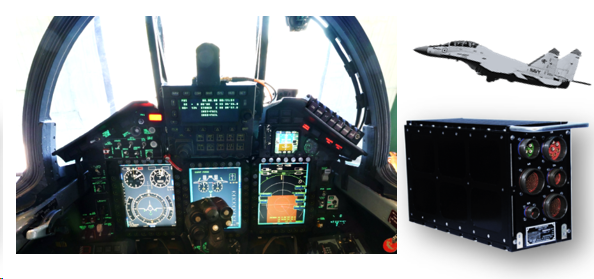
- Mission Computer for MiG 29K aircraft
- Interface Computer for MMS Dornier(D0-228) aircraft
- Engine & Flight Display Unit (EFDU) for Jaguar DARIN III aircraft
- Digital Map Generator(DMG) for LCA MK1A
- Smart Multi-Function Display(SMFD) for LCA MK1A
2. Mission Systems Avionics LRUs under development in-house:
- Unified Mission Computer(UMC) for HAWK Mk 132 aircraft
- Unified Display & Mission Computer(UDMC) for ALH
- Smart Multi-Function Display(SMFD) & Multi-Function Display(MFD) for HTT-40 aircraft.
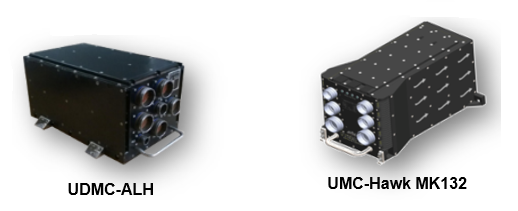
3.Mission Systems Avionics LRUs for Future platform:
- Smart Multi-Function Display (SMFD) for Su-30 aircraft.
- Mission Computer for IMRH.
A range of system, software and algorithms for MMI, navigation and weapon guidance with Sensor Data Fusion, Digital Map Generation, Enhanced Ground Proximity Warning, On-board Virtual Training System, SimulatorSystem etc. have been developed by the Centre. An ARINC 653 compliant indigenous Real Time Operating System for use in Avionics sub-systems is another achievement.
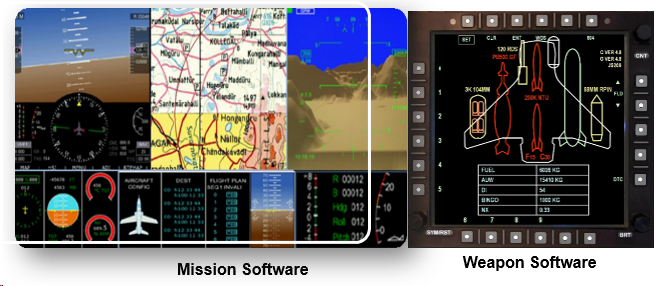
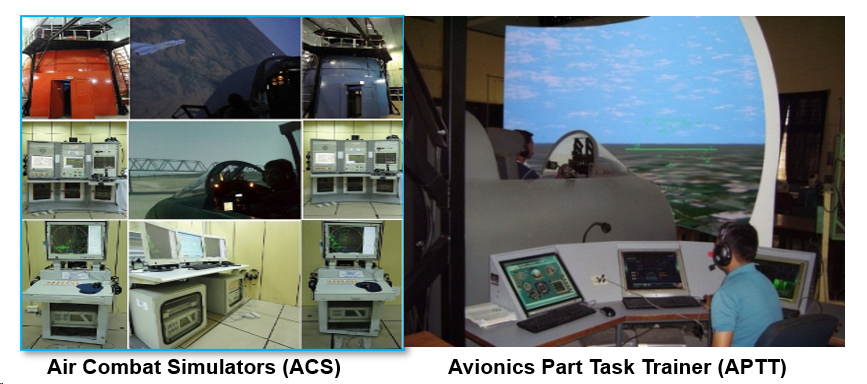
MCSRDC has competence in design, development and upgrade of Flight simulators for Fixed & Rotary Wing Platform.
a)Flight Simulators- Commissione
- Upgrade of Air Combat Simulator (ACS)
- Avionics Part Task Trainer(APTT) for MiG-21 Bison upgraded aircraft at Five Air Force Stations
- Avionics Upgrade of Sea Harrier (LUSH Upgrade)
- Upgradation of Navigation & Weapon Systems Mission Simulator (NWSMS) & Mirage Mission Simulator (MMS) at AF Station, Gwalior for Mirage 2000 Aircraft
b) Flight Simulators – Under development:
- Fixed Base Full Mission Simulator (FBFMS) for Jaguar DARIN-III
FBFMS will have the capability to train the pilots from aircraft start up, taxying, take off, navigation, mission functions including weapon releases, approach and landing in normal and emergency conditions, Instrument Flying procedures, operation of mission systems and sensors (Radar, EO/IR pods, RWJ/SPJ, CMDS), flying in adverse weather & visibility conditions. The simulator will enhance the quality of flying training by exposing the pilots to various contingencies in the entire operating envelope.
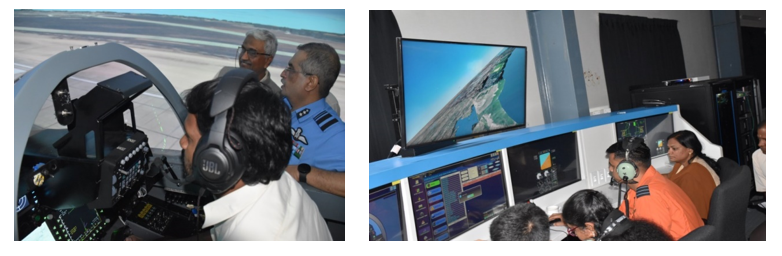
2. HTT-40 Synthetic Training Equipment (SyTE)
Synthetic Training Equipment (SyTE) for HTT-40 aircraft will consist of 01 no. of Fixed Base Full Mission Simulator (FBFMS) and 02 nos of Cockpit Procedure Trainers (CPT-1 & CPT-2).
3. Full Motion Full Flight Simulator(FMFMS) for LUH
The FMFMS shall replicate the behavior of the LUH helicopter throughout its flight envelope to meet the training needs of the helicopter pilots. It shall replicate motion, visual & aural cueing to provide the feel of the flight
environment, a cockpit with all displays, controls & panels as in the helicopter and provide training in all weather, visibility, day & night conditions.
4. Level D Full Flight Simulator(FFS) for Hindustan-228 A/C
Level-D FFS shall exactly replicate the behaviour of Hindustan-228 aircraft throughout its flight envelope. This simulator is being developed according to DGCA India’s Level-D FFS requirements. It will be used as a training aid for Hindustan-228 aircraft pilots for all the applicable Normal, Abnormal, and Emergency procedures in various lighting & visibility conditions (e.g. day, night, twilight, moonlight, and dark night), and in various weather & atmospheric conditions like clouds, haze, mist, and fog etc.
Level-D is the most complex level of simulation defined for Full Flight Simulators by civil authorities. This level of simulator is termed as Zero Flight Time Training (ZFTT) device.
c)Flight Simulators – In pipeline:
- Full Mission Simulator for LCH
- Full Mission Simulator for Su-30 Upgrade
- Full Flight Simulator for UHM
- Full Mission Simulator for LCA MkIA
- Full Motion Flight simulator for IMRH
a) AI based systems developed:
i) Automatic Target Recognition(ATR) System
Automatic Target Recognition uses Artificial Intelligence (AI) based CNN models to automatically recognize sea targets without intervention of operator/pilot. It reduces the Pilot or the Observer work load and facilitates superior maritime surveillance.
ii) Health and Usage Monitoring System (HUMS) for Helicopter Maintenance AI based Health and Usage Monitoring System (HUMS) for Helicopter Maintenance has been developed to facilitate Condition Based Maintenance (CBM) instead of Fixed Time before Overhaul (TBO) based maintenance. It Results in reduction in downtime of the helicopter; thereby enhancing fleet availability.
b) AI based systems under development:
i) AI enabled Automated Training Assessment System
AI enabled Automated Training Assessment System shall provide an automatic assessment of the Pilot training session which allows the trainee and/or the instructor to review progress and identify what type of additional training may be necessary.
It will also reduce the manual effort involved in preparing the assessment report thus increasing the time available for the instructor to perform multiple training sessions.
ii) AI based Intelligent Debrief System (IDS)AI based Intelligent Flight Debrief System shall provide the capability of extracting intelligence from recorded data and voice. Also it enables an automatic analysis of the flight data and provides a comprehensive picture of flight testing. This greatly reduces the manual effort involved in validation of system performance hence reducing the time required for certification of the system.
iii) AI based Computer Generated Adversaries (CGA) for Enhanced Combat Training AI based Computer Generated Adversaries shall provide the capability of autonomous behaviour modelling of adversaries to resemble human behaviour. It provides a competitive combat training scenario to trainee pilot which will accelerate the process of building the combat skill of trainee pilot.
a) Indigenous Real Time Operating system(HAL-RTOS)
Full-featured RTOS developed based on international standard ARINC 653. HAL-RTOS is successfully integrated & flight tested on HAWK-I aircraft.
Further, advanced security features for HAL-RTOS has been implemented to harden the RTOS against potential cyber-attacks. The secured HAL RTOS can be used in strategic Avionics systems development for combat aircraft, helicopters, UAVs to improve the overall safety & security of the Avionics system.
b) Advance Multicore Processor based Single Board Computer(SBC) for in-house developed avionics units :
Single Board Computer (SBC) is high speed processing module with on board memory and general purpose interfaces. Single Board Computer is responsible to run the operational flight program and process the received sensor data and execute the required algorithms reliably to complete the mission program.
Design & Development of Advance Multicore Processor based Single Board Computer (SBC) is in progress.